Tag: exhibition
Made In Ancient Egypt
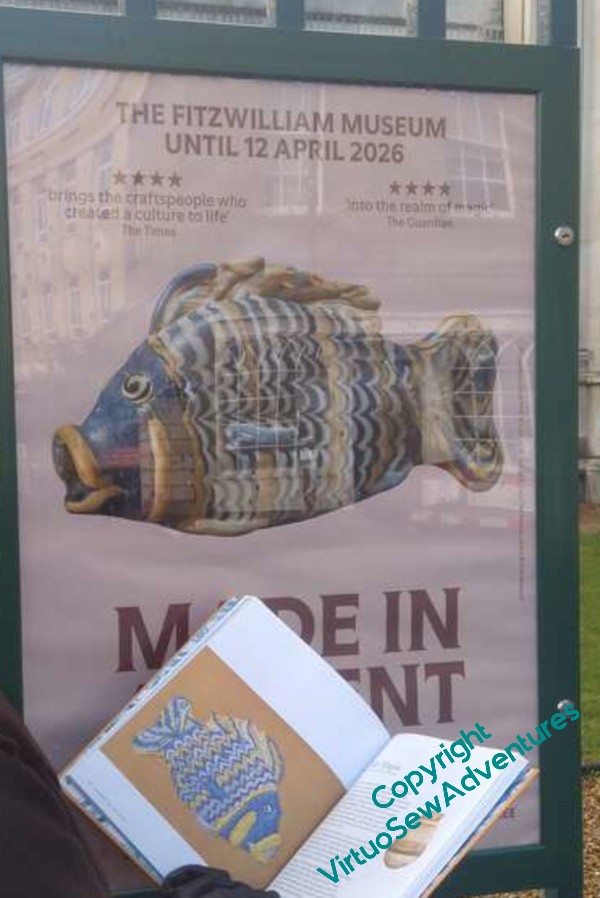
Another exhibition I’ve visited recently is “Made in Ancient Egypt” at the Fitzwilliam Museum, Cambridge. I hadn’t in fact heard it was on until we got to Cambridge for entirely other reasons, but at least I had a copy of my book with me so I could introduce it to some of the inspirations!
Not many inspirations, in fact, as the exhibition covered ancient Egyptian art and craft over many centuries, and the “Dreams of Amarna” project as it developed, I’ve concentrated, not just on the Amarna period, but on the Amarna period as it was known and understood in Mary Chubb’s time. This was necessary in order to give me some focus, and some sensible basis for my researches and ideas, but it does mean that now I’m not requiring myself to restrict my attention, vast swathes of time are shouting for attention!
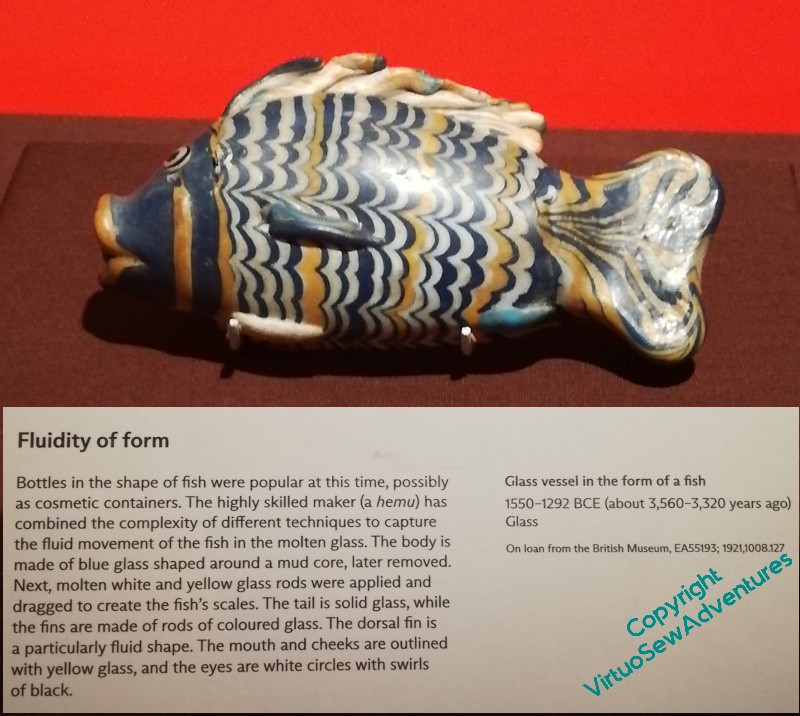

Mind you, I did find the original of the glass vessel in the form of a Nile Tilapia that I used to inspire my embroidery!
The original is even more enchanting in person, as it were, plump, crisp in outline, delightfully bright in colour. And having heard a modern glassworker speak to the difficulties of making one, it’s clear we shouldn’t underestimate the ancients!
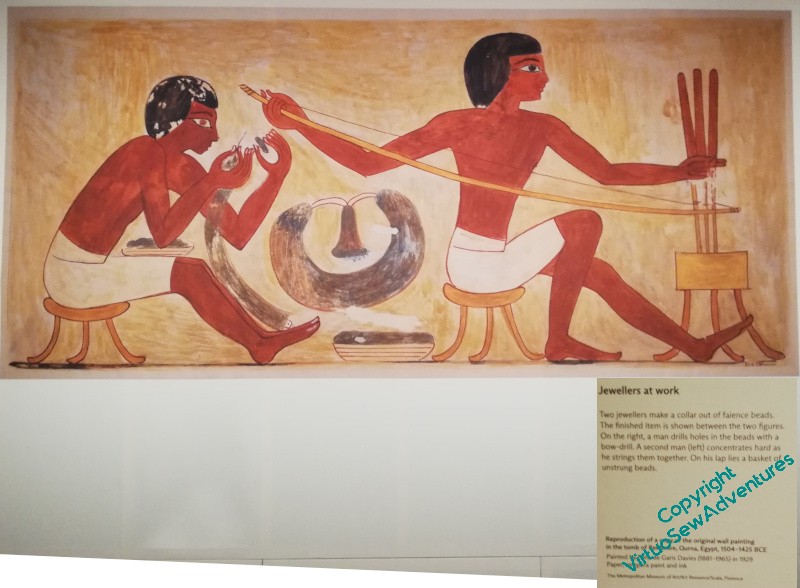
That was very much the theme of the exhibition, in fact. It was illuminated, and illustrated, by some large reproductions of watercolours made by archaelogical recording artists such as Nina de Garis Davies showing extracts of tomb paintings, and by some translations of stelae showing quite clearly that those who erected them were conscious of, and proud of, their own hard won expertise and that of their ancestors.
The exhibition as a whole covered a huge range of skills, carving, faience modelling (and carving, which I had not known they did!), jewellery making, even textiles – there was a fine tablet woven sash, an old friend from Liverpool World Museum, a very familiar seeming linen dress, and some breathtakingly fine linen strips, which looked unused, still strong and ready to go.
I think the exhibition runs until April, and as it has gathered finds from many museums, not just in the UK, if you are interested, I thought it well worth both time and money.
Meeting Mary Linwood
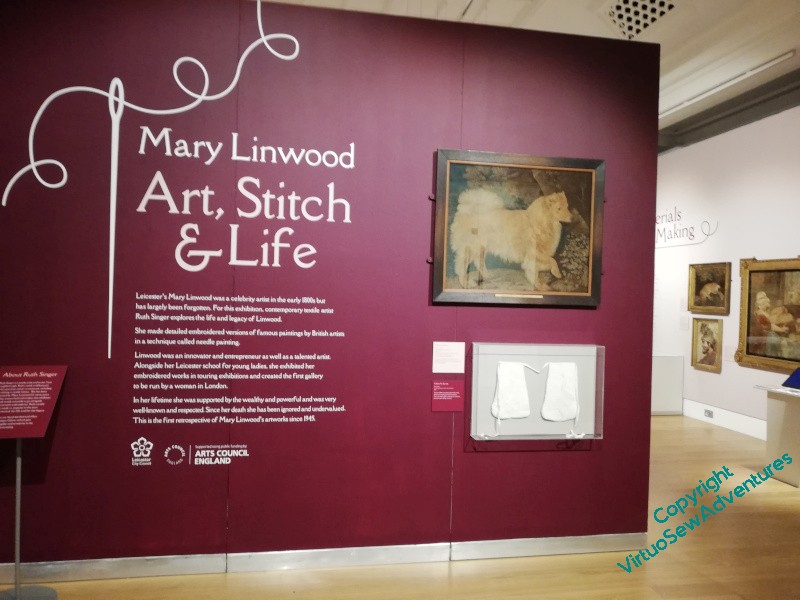
Just lately, I was able to take advantage of a cross-country journey to go – not much out of my way! – to see an exhibition of the life and work of Mary Linwood, an embroiderer and teacher working during the late 1700s and early to mid 1800s (she died at the age of 90 in 1845). The exhibition is in the Leicester Museum and Art Gallery, which is currently in the throes of a redevelopment – this exhibition speaks well of their ambition for the future.
She was very well known and much admired in her time, and owned a gallery in Leicester Square in London which exhibited her works, some of them “semi-staged” with the approach and surroundings designed to maximise their impact. In fact her gallery predates Madame Tussaud’s, making her as far as we know the first woman to own a gallery in Britain.
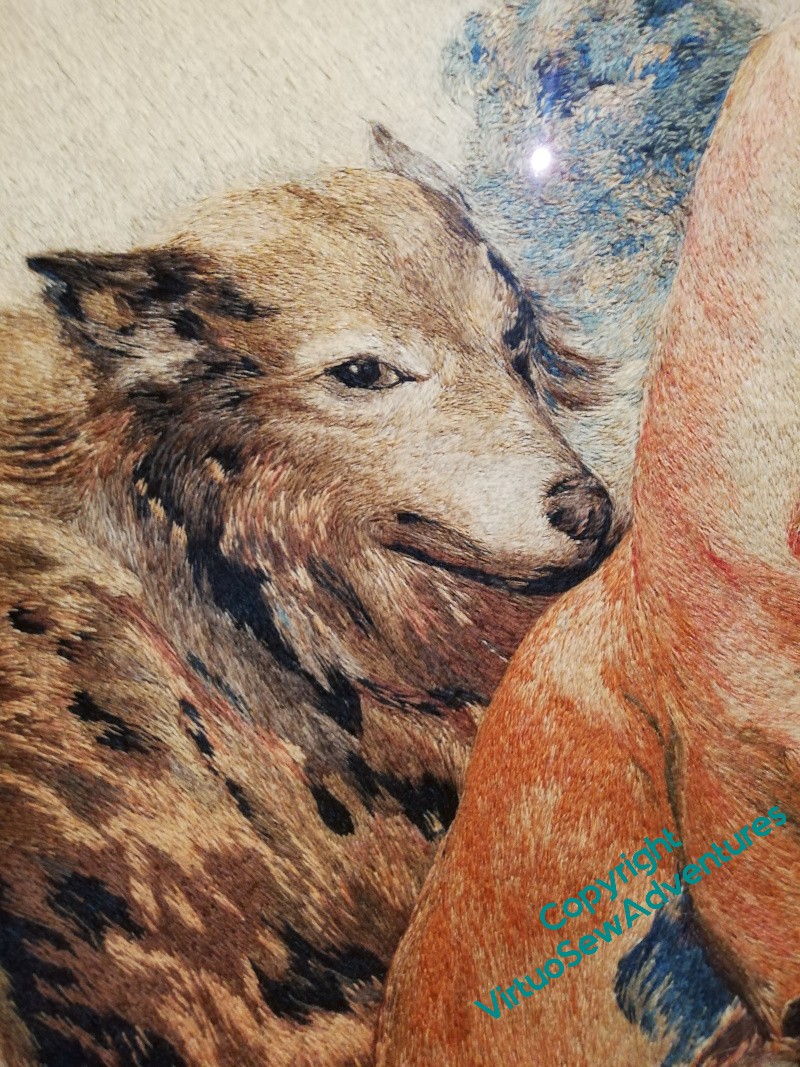
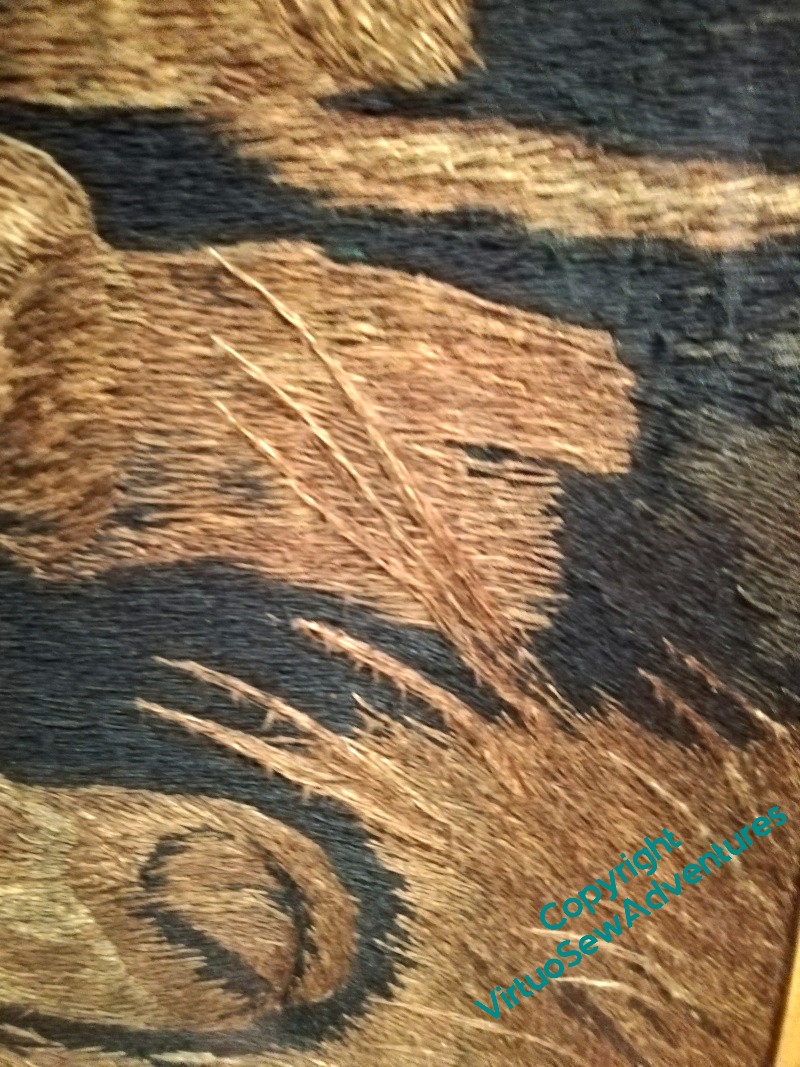
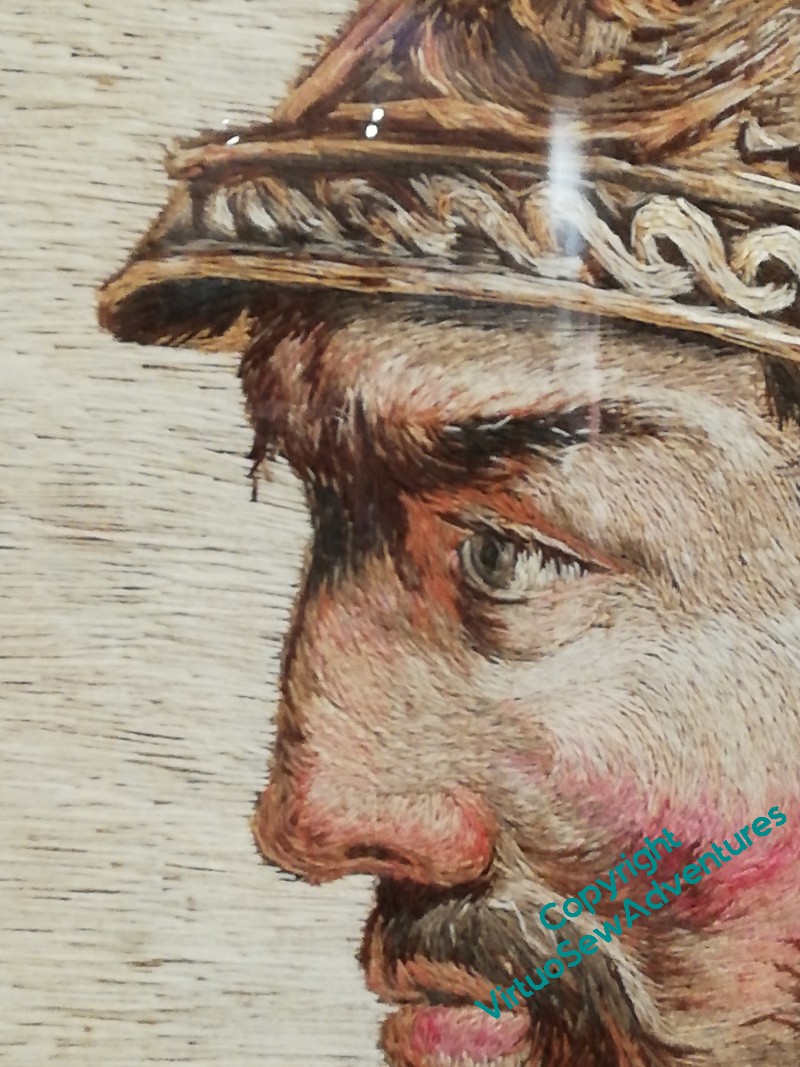
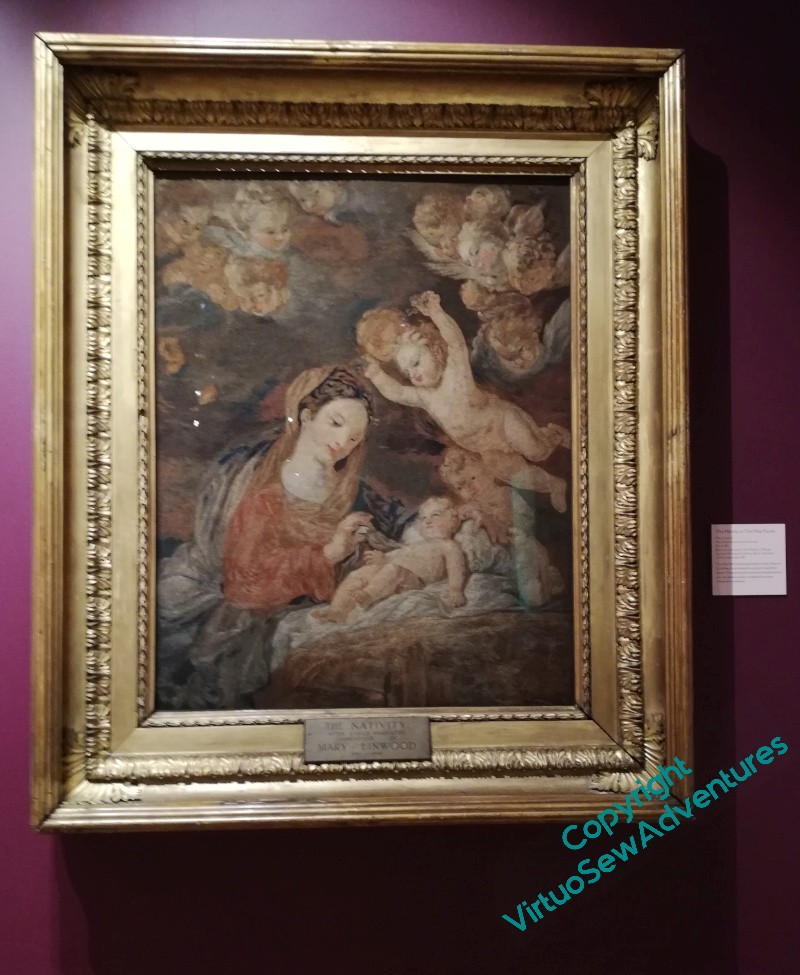
Unfortunately, by the time she died, she was not so fashionable or popular, and her works were dispersed, some to family and patrons, some disappearing completely.
Most of her works seem to have been reproductions in stitch of the works of painters working at the time, which has allowed some critics and writers to say she was “merely a copyist” and “not an artist at all”.
I invite them to try to render any beloved painting in stitches without losing the life and the vigour of the original work. Going from paint or drawing that is not conceived with embroidery in mind to an embroidered rendering is difficult to say the least, and entails much care and consideration, not merely in the execution.
The exhibition runs until February 22, and I recommend not merely going, but taking a magnifier with you!
Mary’s work, although saddened by the fading of the naturally dyed wools she used, remains vivid and assured, textural and painterly both at once, and this exhibition, curated by the textile artist Ruth Singer, gives us a good sense of what she did and the surroundings and the context in which she worked. Some of Ruth Singer’s own work, and some collaborative projects she developed and lead while planning the exhibition, provide a modern response and context for it.
Exhibition – For Worship and Glory II
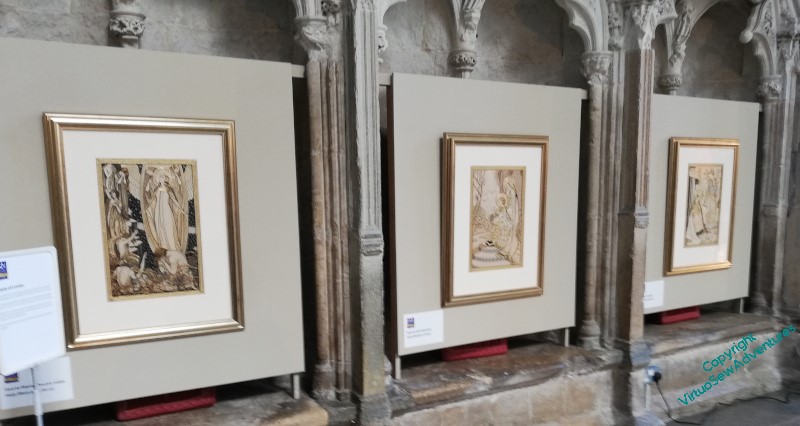
A few weeks ago I went to see the Royal School of Needlework Exhibition “For Worship and Glory”, in its second incarnation, in the Lady Chapel in Ely. The centrepiece of the exhibition was a series of embroideries inspired by the Litany of Loreto, donated to the RSN when Mayfield Convent in Surrey was closed during the 1970s. Since I saw the first version of the exhibition a few years ago, it has been discovered that the designs were created by an Italian graphic designer, Ezio Anichini, at the beginning of the 20th Century.
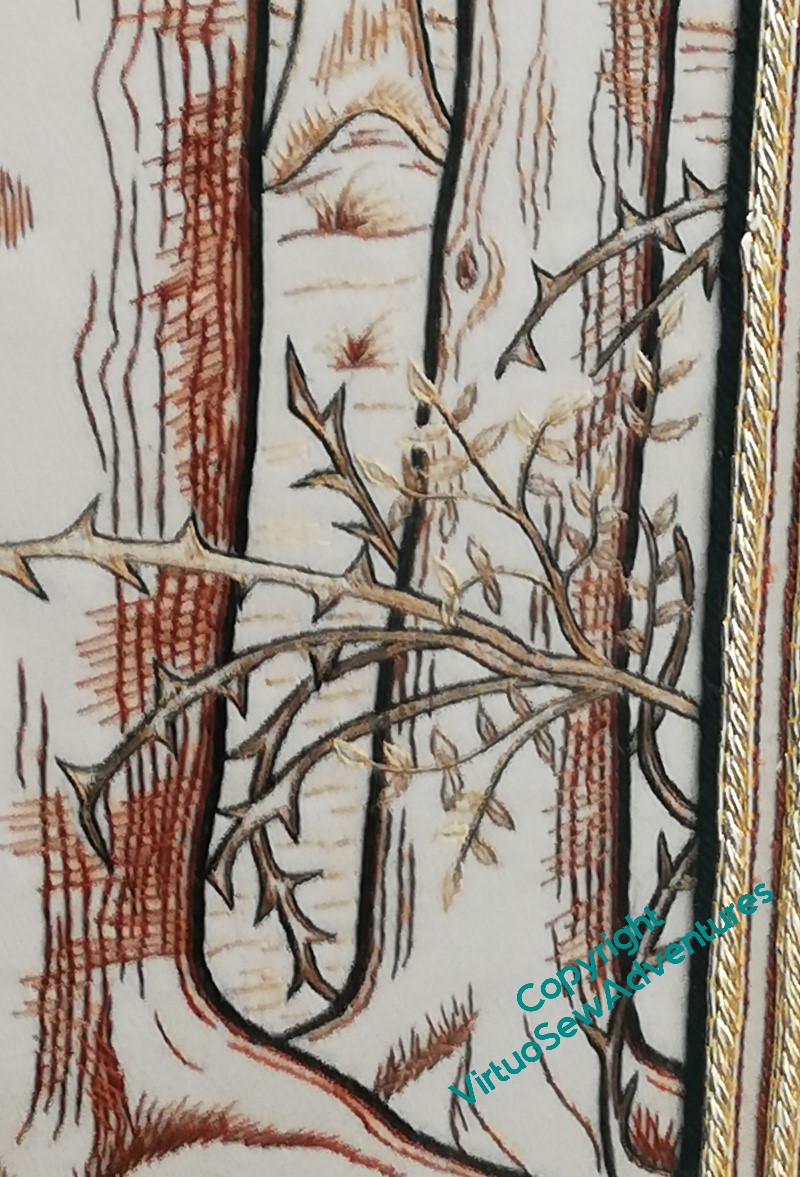
The panels are in a very restricted palette using silk floss and filoselle – browns and golds, some black, and a very tiny amount of blue, and although the stitches are described as “mostly long and short”, with the addition of stem stitch, split stitch and straight stitches, the panels didn’t have the heaviness I associate with long and short stitch. On the contrary, my primary impression was to be astonished and impressed by the manner in which the works were clearly embroideries and yet maintained a kinship with the drawn design. Look at the bark on this picture, the sketchy and textural feel to it, contrasting with the almost naturalistic rendering of the briars.
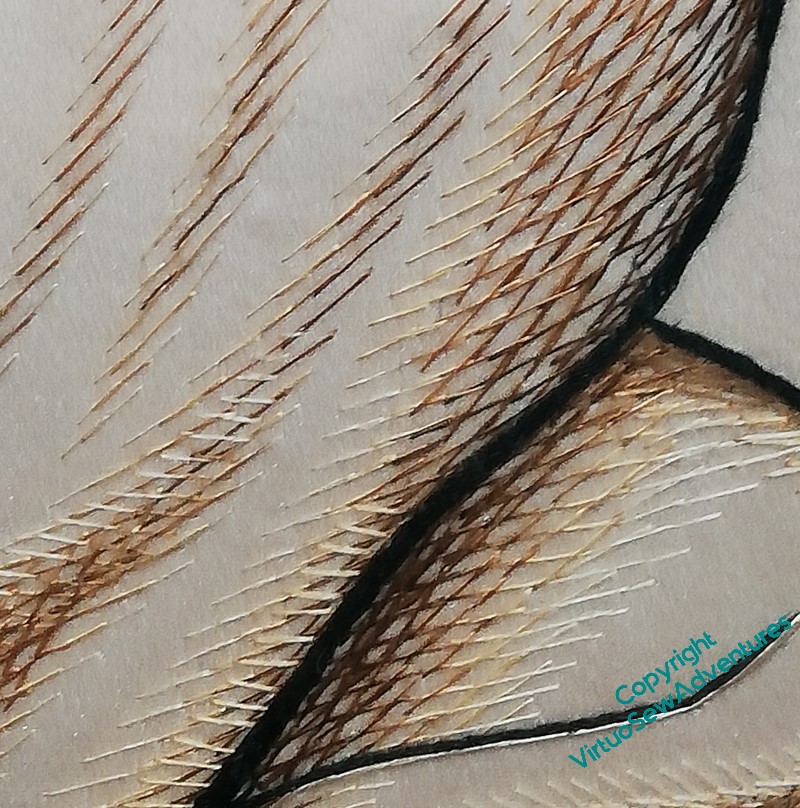
Even more strikingly – and my phone camera, in spite of the wonderful light in Ely’s Lady Chapel, really wasn’t up to the task – look at the rendering of the folds of fabric here. The stitches are just straight stitches, using carefully chosen shades and thicknesses of thread, at carefully judged spacings and angles, and yet the impression of flowing folds in fabric is beautifully realized.
I was very glad I’d thought to take my lorgnettes, because there were so many enchantingly embodied ideas that I wanted to examine!