Meeting Mary Linwood
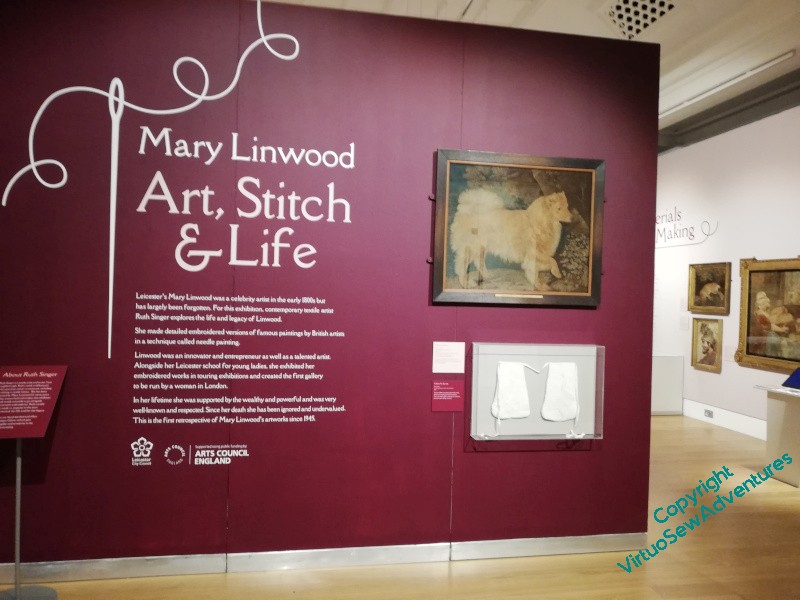
Just lately, I was able to take advantage of a cross-country journey to go – not much out of my way! – to see an exhibition of the life and work of Mary Linwood, an embroiderer and teacher working during the late 1700s and early to mid 1800s (she died at the age of 90 in 1845). The exhibition is in the Leicester Museum and Art Gallery, which is currently in the throes of a redevelopment – this exhibition speaks well of their ambition for the future.
She was very well known and much admired in her time, and owned a gallery in Leicester Square in London which exhibited her works, some of them “semi-staged” with the approach and surroundings designed to maximise their impact. In fact her gallery predates Madame Tussaud’s, making her as far as we know the first woman to own a gallery in Britain.
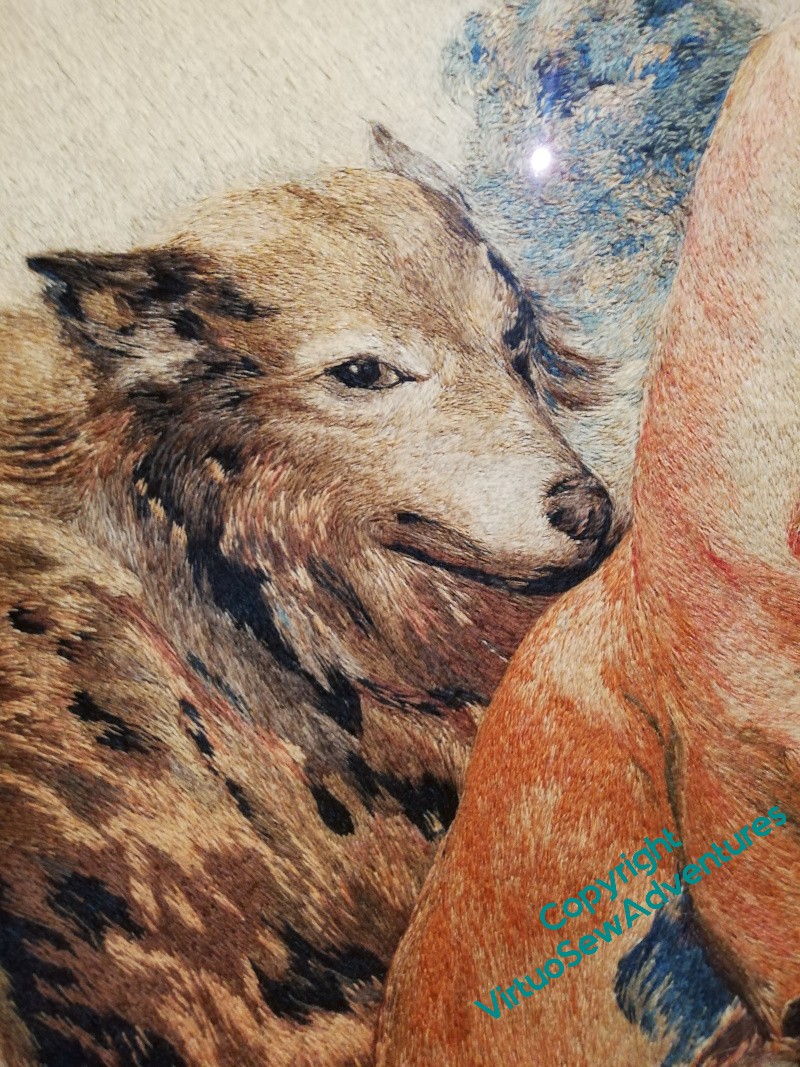
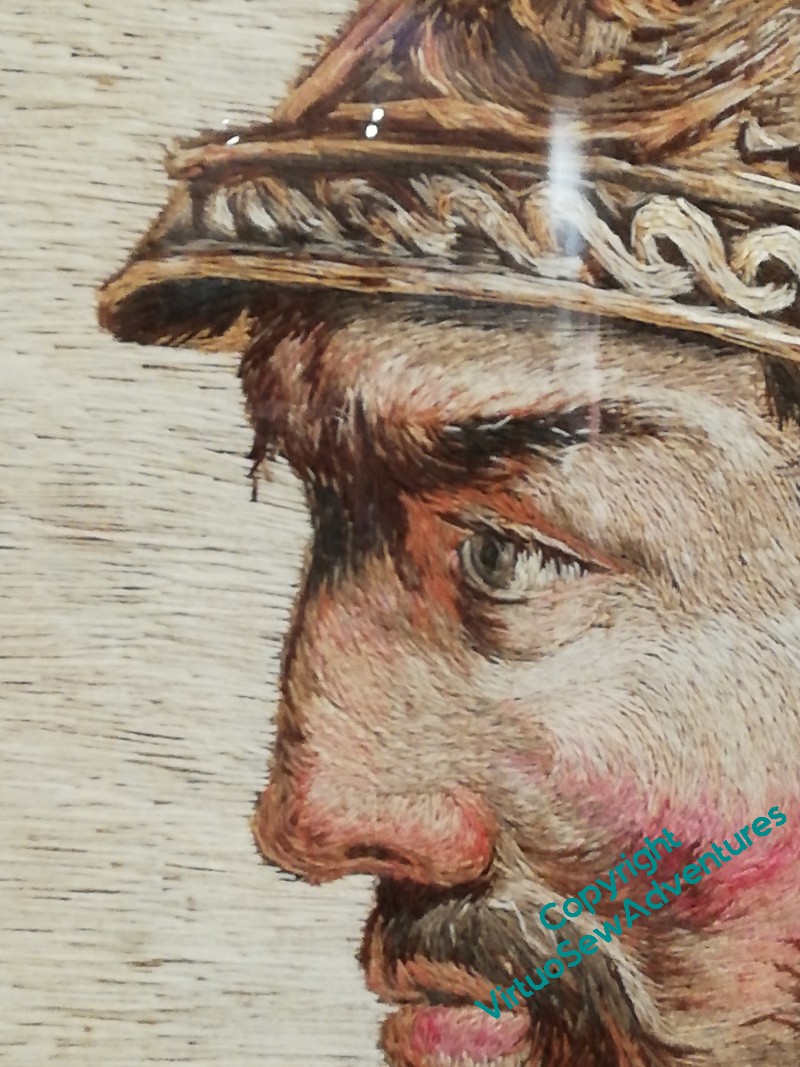
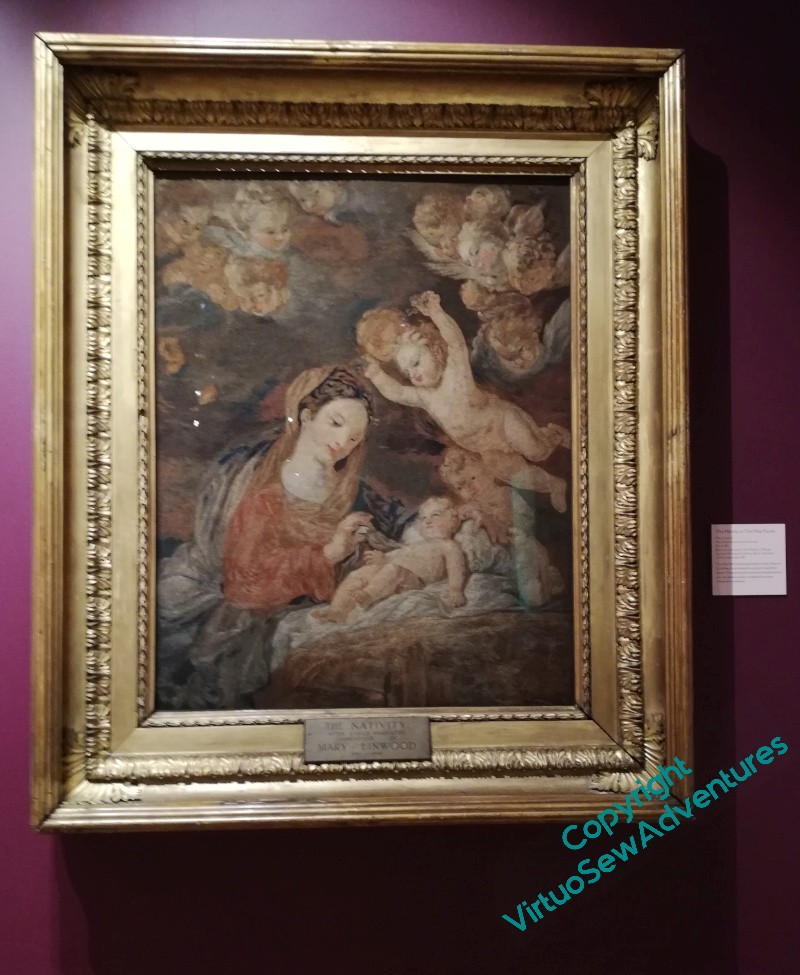
Unfortunately, by the time she died, she was not so fashionable or popular, and her works were dispersed, some to family and patrons, some disappearing completely.
Most of her works seem to have been reproductions in stitch of the works of painters working at the time, which has allowed some critics and writers to say she was “merely a copyist” and “not an artist at all”.
I invite them to try to render any beloved painting in stitches without losing the life and the vigour of the original work. Going from paint or drawing that is not conceived with embroidery in mind to an embroidered rendering is difficult to say the least, and entails much care and consideration, not merely in the execution.
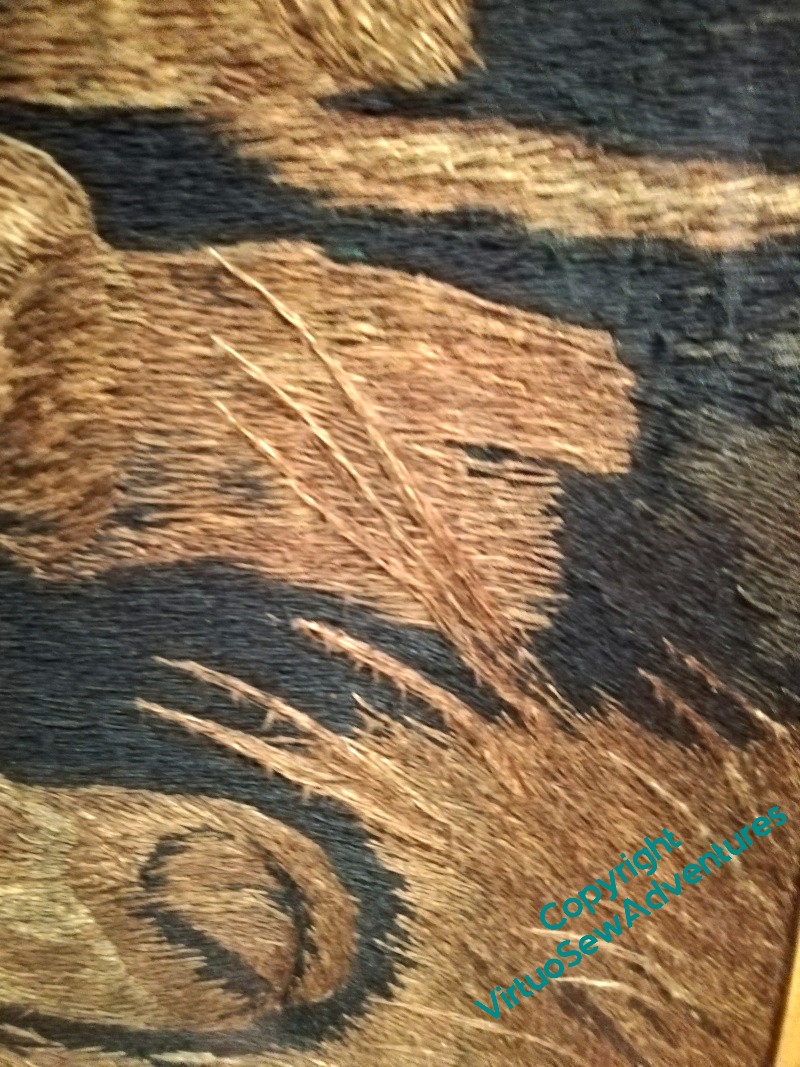
The exhibition runs until February 22, and I recommend not merely going, but taking a magnifier with you!
Mary’s work, although saddened by the fading of the naturally dyed wools she used, remains vivid and assured, textural and painterly both at once, and this exhibition, curated by the textile artist Ruth Singer, gives us a good sense of what she did and the surroundings and the context in which she worked. Some of Ruth Singer’s own work, and some collaborative projects she developed and lead while planning the exhibition, provide a modern response and context for it.

Her work looks incedible – there was an article about her in the Stitchers Journal last year. Lovely to see it in the flwsh I am sure.
It looks great to me and I think it would be more difficult and time consuming to stitch than to paint.